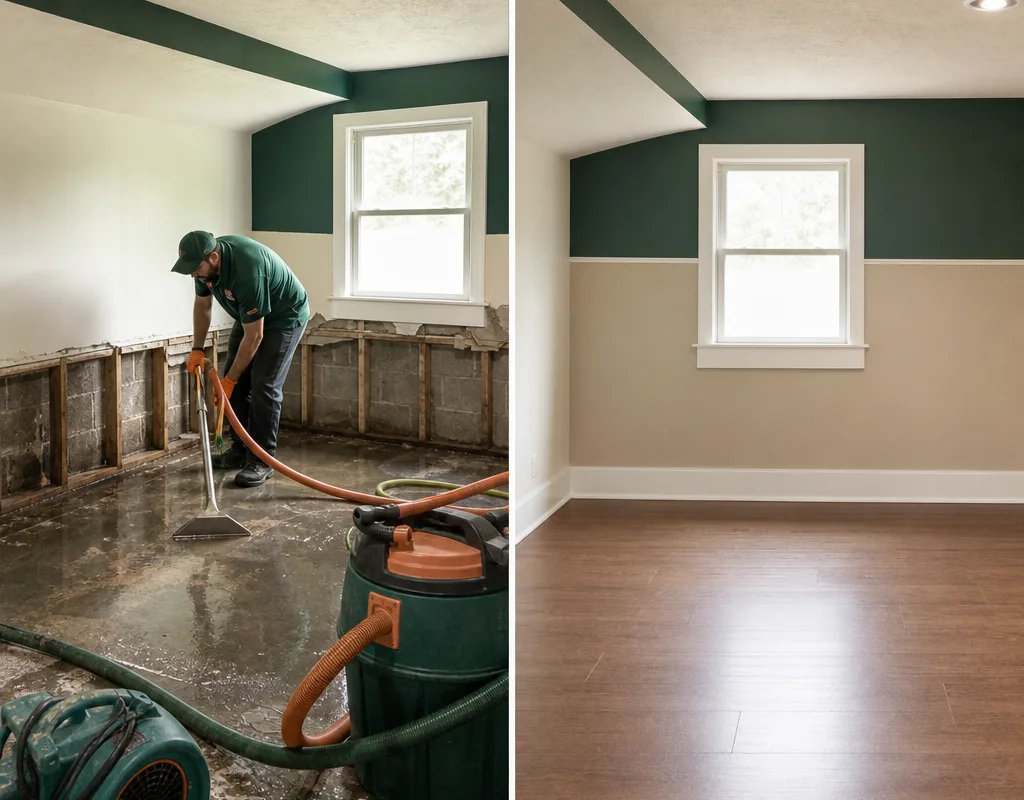
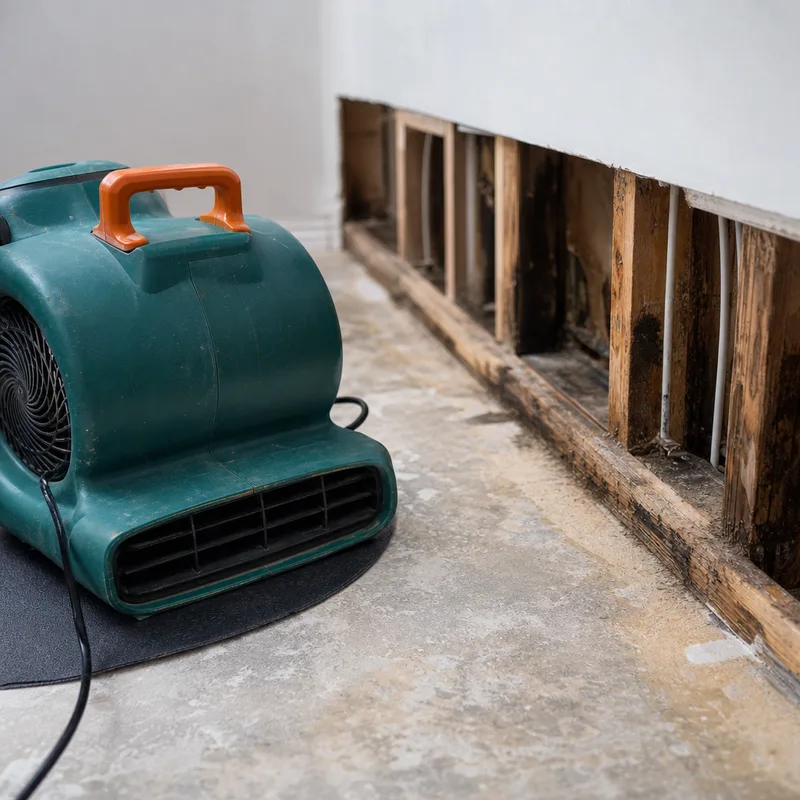
Moisture mapping and documentation
We take baseline readings, track drying progress, and document conditions so decisions are based on measured moisture, not guesswork.
Serving Columbus, Ohio & surrounding areas
Mon–Fri 8am–6pm · Sat 9am–2pm
Water restoration in Columbus, Ohio
When water gets into walls, floors, or ceilings, time matters. Our local team responds fast, documents what we find, and brings your home or business back to clean, dry, stable conditions with a clear scope before repairs begin.
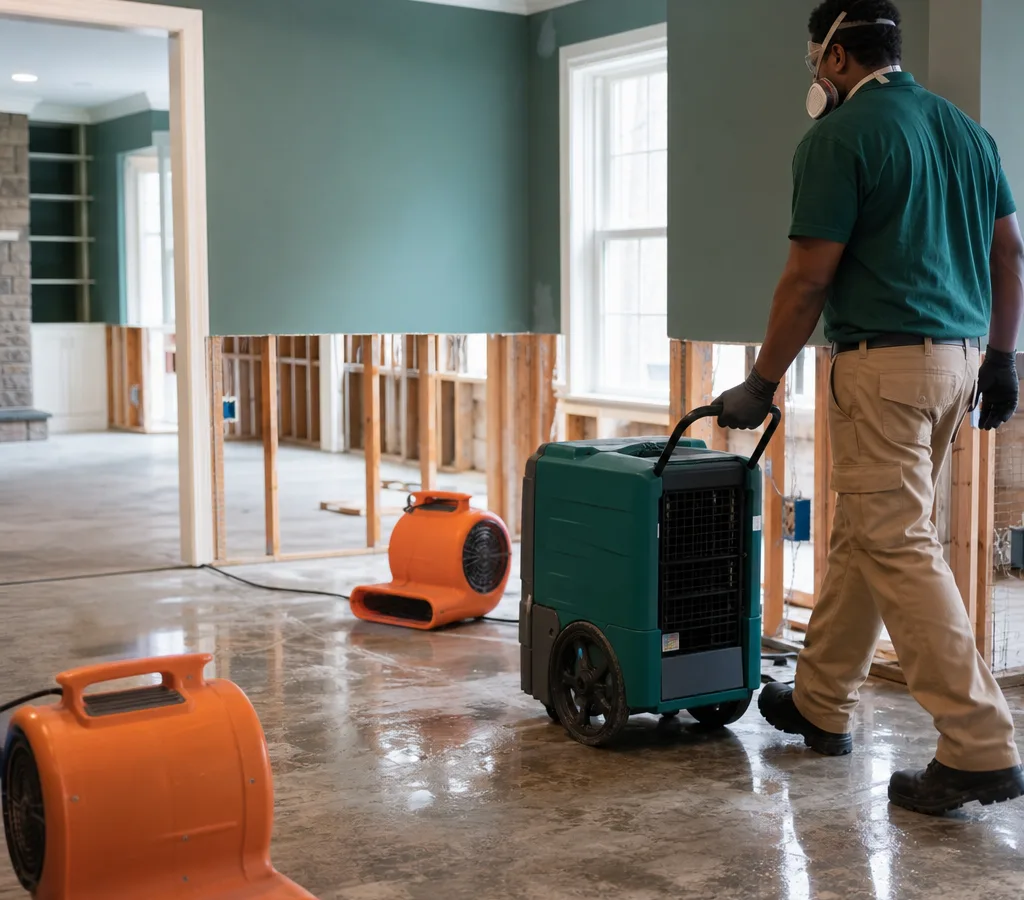
Contain the damage and verify the drying
If you are searching for water restoration Columbus help, you likely have one question: how quickly can the water be stopped, the structure dried, and the damage contained before it spreads.
Water damage rarely stays where it started. Water can wick into drywall, soak insulation, migrate under flooring, and collect in cavities you cannot see. In Central Ohio, quick temperature swings can also slow drying and raise the chance of odor or microbial growth if the right equipment is not set early.
Columbus Mold Removal provides water restoration for residential and commercial properties in Columbus, OH. We handle water extraction, moisture mapping, controlled drying, removal of damaged materials when needed, and coordination of the rebuild step so the property is safe to occupy again.
Whether you are near campus in the University District, in Clintonville with a finished basement, or in a newer build around Dublin or Polaris, the goal is the same: find the wet materials, dry them to a verifiable standard, and prevent secondary damage.
Inspection, stabilization and recovery
Proper restoration is a controlled process, not just placing fans in a room.
First, we identify the source and the extent of wet materials using moisture meters and thermal imaging where appropriate. Moisture mapping matters because water often spreads beneath flooring, behind baseboards, and into adjacent rooms.
Next comes extraction and stabilization. Removing bulk water quickly reduces the load on your structure and lowers how long building materials stay saturated. We then set professional-grade air movers and dehumidifiers and monitor progress with documented readings.
If materials cannot be dried in place—such as swollen baseboard, delaminated drywall, saturated insulation, or compromised flooring—selective demolition may be the safest path. We contain the work area, remove only what needs to come out, and keep the rest of the home usable when possible.
Finally, we help plan the repair phase, which may include drywall, trim, paint, flooring, and cabinet toe-kicks. Repairs should begin after drying goals are met, not simply when the surface looks dry.
Call Now 614-432-8136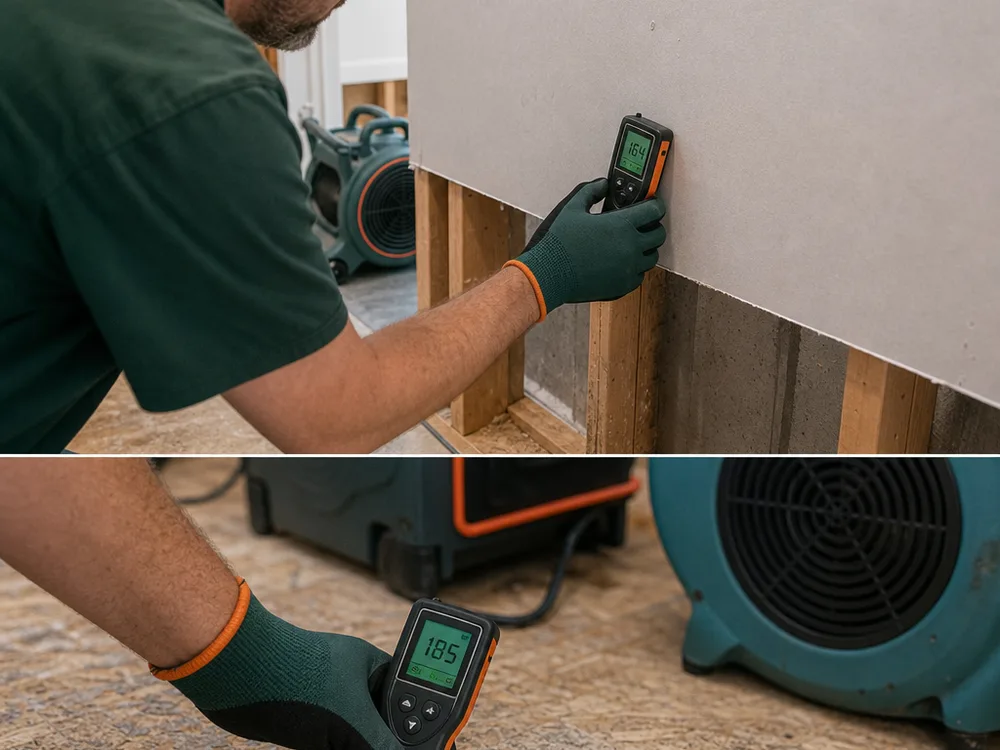
Measured work and a clear scope
We take baseline readings, track drying progress, and document conditions so decisions are based on measured moisture, not guesswork.
When something cannot be dried safely, we remove only what is necessary to protect the structure and avoid spreading damage into clean areas.
Airflow, dehumidification, and containment are matched to the room layout and materials so drying happens evenly without damaging finishes.
We protect flooring and contents where possible, manage debris, and keep pathways clear so your property stays livable during the work.
You get a straightforward plan that separates mitigation work from reconstruction so timelines and responsibilities are easy to follow.
What happens on site
Each job follows a measured sequence from source control and extraction through drying verification and repair planning.
We start by understanding what happened, what is wet, and whether the source has been stopped. If plumbing or appliance shutoff is needed, we coordinate the next step quickly.
We remove standing water, protect salvageable belongings, and set up containment when needed to keep dust and moisture from spreading to unaffected rooms.
We place air movers and dehumidifiers based on measured moisture patterns, not room size alone, and adjust the setup as conditions change.
We take follow-up readings to confirm drying progress. If a material is not drying as expected, we change the approach or recommend selective removal.
Once target materials reach acceptable moisture levels, we outline the repair scope so rebuild work starts on a stable, dry structure.
Pricing depends on the on-site scope
Water restoration in Columbus typically ranges from about $900 to $6,000+, depending on how far water traveled, how much material must be removed, and how many days of drying are required. A small, contained leak with minimal removal may land at the lower end, while a basement with saturated drywall, flooring, and insulation can move into the higher end.
Final pricing is driven by the affected square footage, water category, access, and the type of flooring and wall assemblies involved. The exact cost is confirmed after an on-site inspection and moisture mapping.
Central Ohio building conditions
Columbus properties vary widely, and the building type changes how restoration is approached.
Older neighborhoods such as German Village and parts of Victorian Village often include older wall assemblies, layered flooring, and tight cavities where moisture can hide. Drying can require small access openings and careful monitoring to avoid trapping moisture behind finishes.
In areas with more finished basements, including many homes around Clintonville and parts of the north side, water events can affect multiple material layers at once. A restoration plan has to address each layer or odor and swelling can return after the surface looks fine.
For commercial spaces near the Short North and downtown, fast stabilization can protect inventory and reduce downtime. That usually means quick extraction, targeted containment, and a drying layout that keeps walkways safe.
If water damage also raises concerns about indoor air quality, our team can coordinate a plan that fits your situation. When conditions warrant it, mold removal can be considered as part of the overall recovery.
Call Now 614-432-8136Helpful answers before your inspection
Start the same day whenever possible because moisture moves quickly into drywall, trim, and flooring seams. In Columbus homes with finished basements or layered flooring systems, delays often mean more material has to be opened up to dry correctly.
Most drying jobs take about 3 to 5 days, but the real timeline depends on what got wet and how saturated it is. Dense materials, multiple layers, and hidden cavities can extend drying because the goal is verified moisture reduction, not a dry-to-the-touch surface.
No. Removal depends on water category, saturation level, and whether the material can be dried to an acceptable moisture level. We try to save materials when it is safe, but selective removal is often the most reliable path when drywall has wicked water high, insulation is soaked, or flooring is buckled or delaminated.
Yes, we can provide documentation such as moisture readings, photos, and a written scope that many insurers request. Coverage and deductibles vary by policy, so we focus on clear reporting and the steps needed to return the property to dry, safe conditions.
Clean water usually comes from a supply line or rainwater intrusion, while contaminated water can include sewage backups or water that has passed through unsanitary areas. That distinction affects containment, cleaning methods, and what materials must be removed rather than dried in place.
Often yes, especially when the affected area can be contained and drying equipment can run safely with clear walkways and protected floors. If contamination is involved or large areas require demolition and drying, we will explain which spaces should remain off-limits until that work stage is complete.
Start with an on-site assessment
Tell us what happened and what areas are wet. We will walk you through next steps, schedule an on-site assessment, and provide a clear scope that prioritizes fast stabilization and verified drying. For the wider picture, read our Columbus mold removal overview.